View all questions & answers for the NSE 7 - Secure Networking 7.6 Architect Exam Materials exam
NSE 7 - Secure Networking 7.6 Architect Exam Materials-Question 27 Discussion
Comments
Selected Answers: A, B
Selected Answers: A, B
Selected Answers: A, C
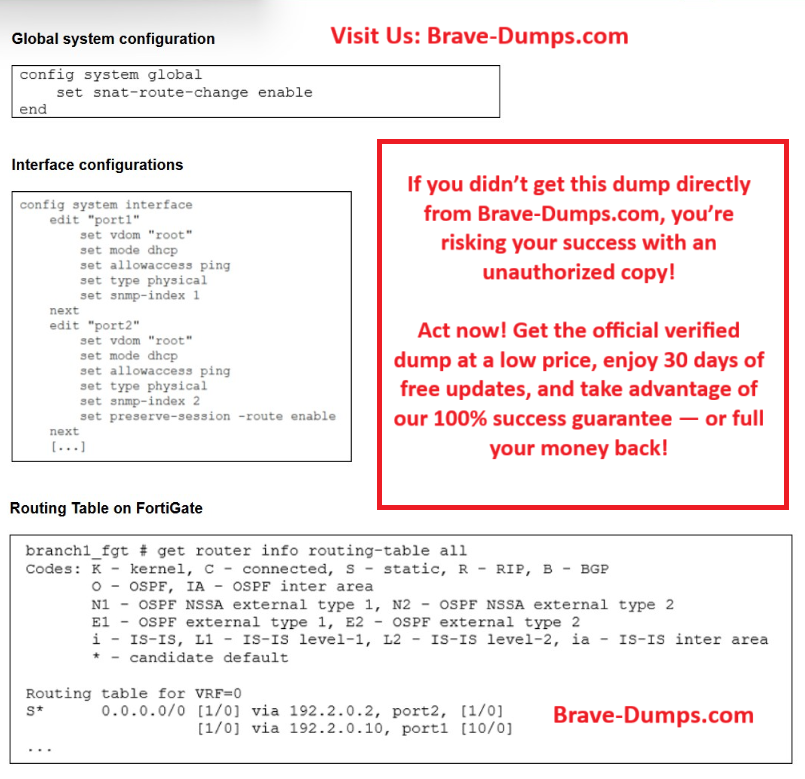
A is correct: on a route change, FortiGate flags existing sessions as dirty so they are re-evaluated when new packets arrive.
C is correct: preserve-session-route is enabled on port2, and the route egressing port2 is still valid. Existing sessions therefore keep being routed over port2, while only new sessions use port1.
Refer to the exhibits. The administrator increases the member priority on port2 to 20. Assuming the route egressing port2 is still valid, upon configuration changes and the receipt of new packets. Which two actions does FortiGate perform on existing sessions established over port2? (Choose two answers)
Brave-Dump Clients Votes