View all questions & answers for the FCSS - SD-WAN 7.4 Architect Exam Materials exam
FCSS - SD-WAN 7.4 Architect Exam Materials-Question 32 Discussion
Comments
Selected Answers: A, C
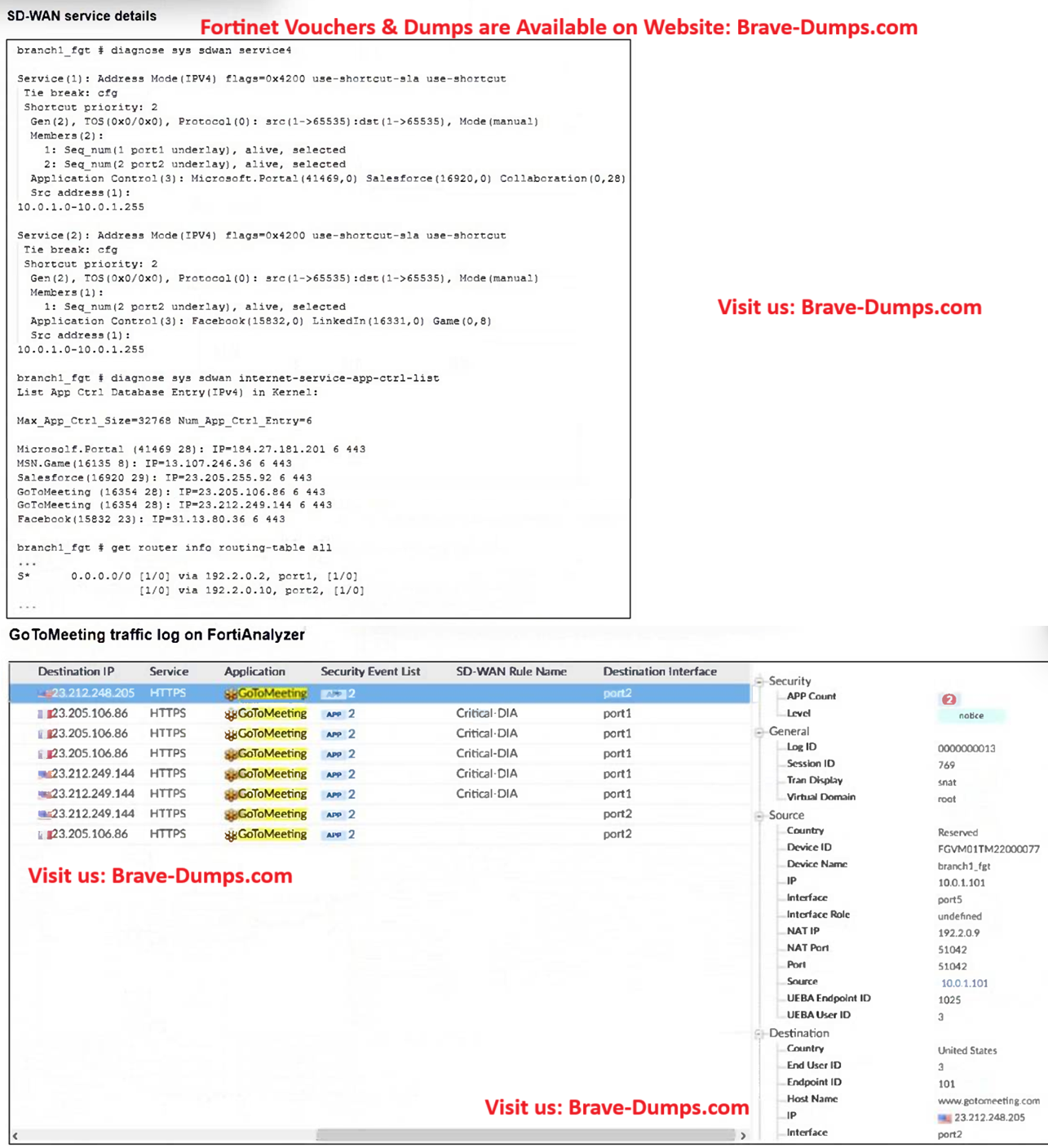
According to the guide, "By default, SNAT sessions are not flagged as dirty following a routing change that impacts the session."
This means that when the session was first established, it matched the default SD-WAN rule based on the routing table at that time.
Later, once the application was identified, it should have matched rule ID 1.
However, because the session uses SNAT to access the internet, FortiGate didn’t mark the session as “dirty,” so it wasn’t re-evaluated.
As a result, the traffic continued to flow through port2, instead of being redirected to the new preferred path.
Selected Answers: A, B
-
Mattia Bruno
2025-08-27 15:50:28
It's part of the collaboration (28)
Refer to the exhibits. An administrator is testing application steering in SD-WAN. Before generating test traffic, the administrator collected the information shown in the first exhibit. After generating GoToMeeting test traffic, the administrator examined the corresponding traffic log on FortiAnalyzer, which is shown in the second exhibit. The administrator noticed that the traffic matched the implicit SD-WAN rule, but they expected the traffic to match rule ID 1. Which two reasons explain why some log messages show that the traffic matched the implicit SD-WAN rule? (Choose two answers)
Brave-Dump Clients Votes