View all questions & answers for the NSE 6 - FortiManager 7.6 Administrator Exam Materials exam
NSE 6 - FortiManager 7.6 Administrator Exam Materials-Question 26 Discussion
Comments
Selected Answers: A
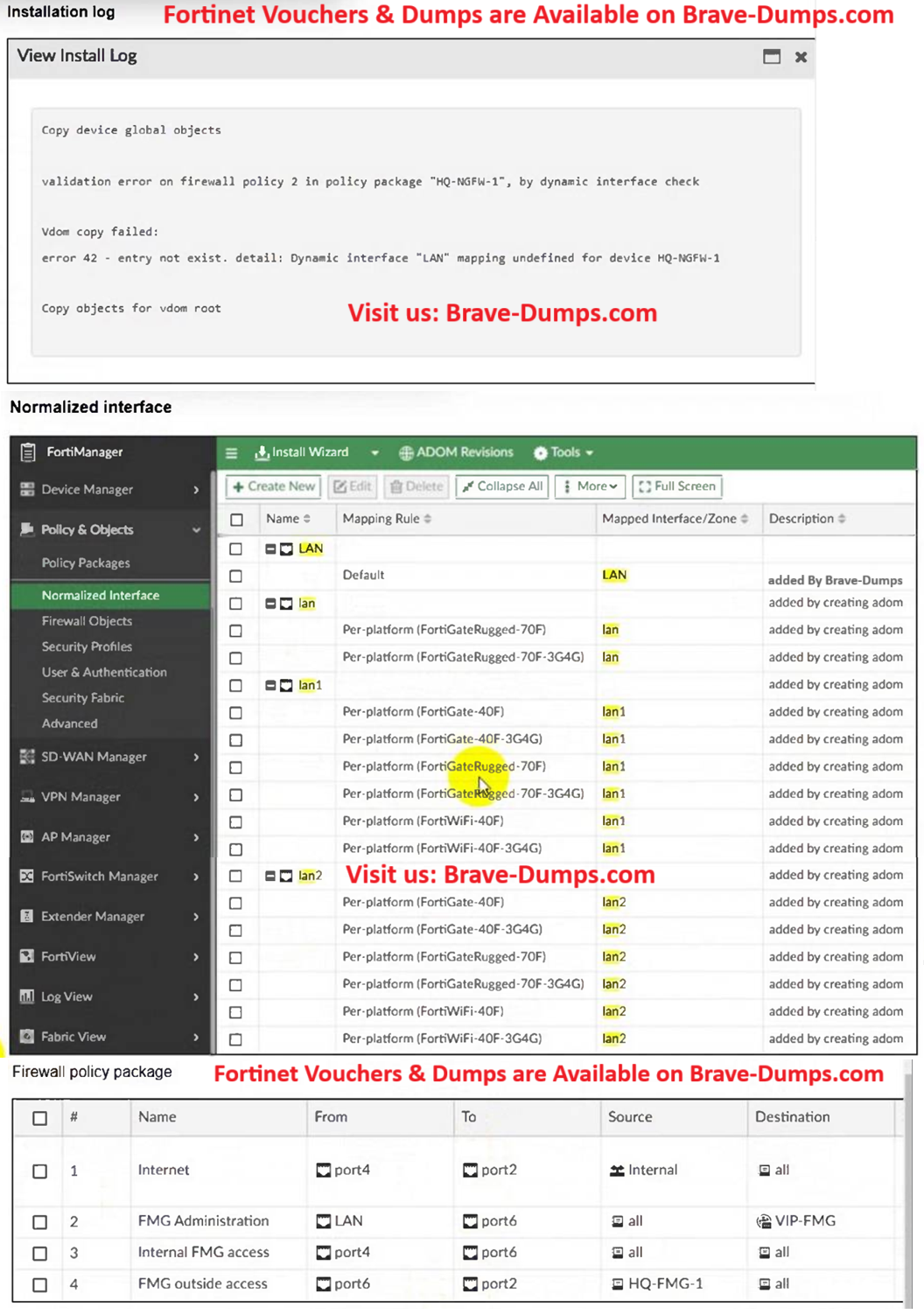
Map logical interface names used in a policy package to physical interface names on a specific FortiGate device.
Keep using a shared policy package across different models without editing the base policy.
In this case, you can map:
LAN → lan1
Selected Answers: D
FortiGate models have specific interface names (e.g., port1, wan1, lan1), and these names vary by platform.
The FortiGateRugged-70F uses lan1 instead of a generic "LAN" interface name.
To resolve the error, you must update the policy to reference the correct interface name supported by the device.
Selected Answers: A
D could be an alternative but better choice in this case is A.
Selected Answers: A
while option D could also resolve the issue, however in this case your going to change the interface used in the policy, and if there are new Fortigate devices to be added with different models that uses the same policy, but have different interface naming (example: port1) its going to cause the same issue and will result in more administrative overhead.
but creating a per-device mapping for LAN interface, you don't need to change the interface on the policy, but change the interface mapping of LAN depending on the FortiGate devices in your environment, this would be more scalable solution and less overhead for the administrator.
Refer to the exhibits. An administrator must replace the source LAN interface in policy ID 2 on their FortiGateRugged-70F. However, when they try to install the policy package, they receive the error shown in the exhibit. What should the administrator do to resolve the error? (Choose one answer)
Brave-Dump Clients Votes