View all questions & answers for the FCSS - FortiSASE 24 Administrator Exam Materials exam
FCSS - FortiSASE 24 Administrator Exam Materials-Question 14 Discussion
Comments
Selected Answers: A, C, D
Selected Answers: A, C, D
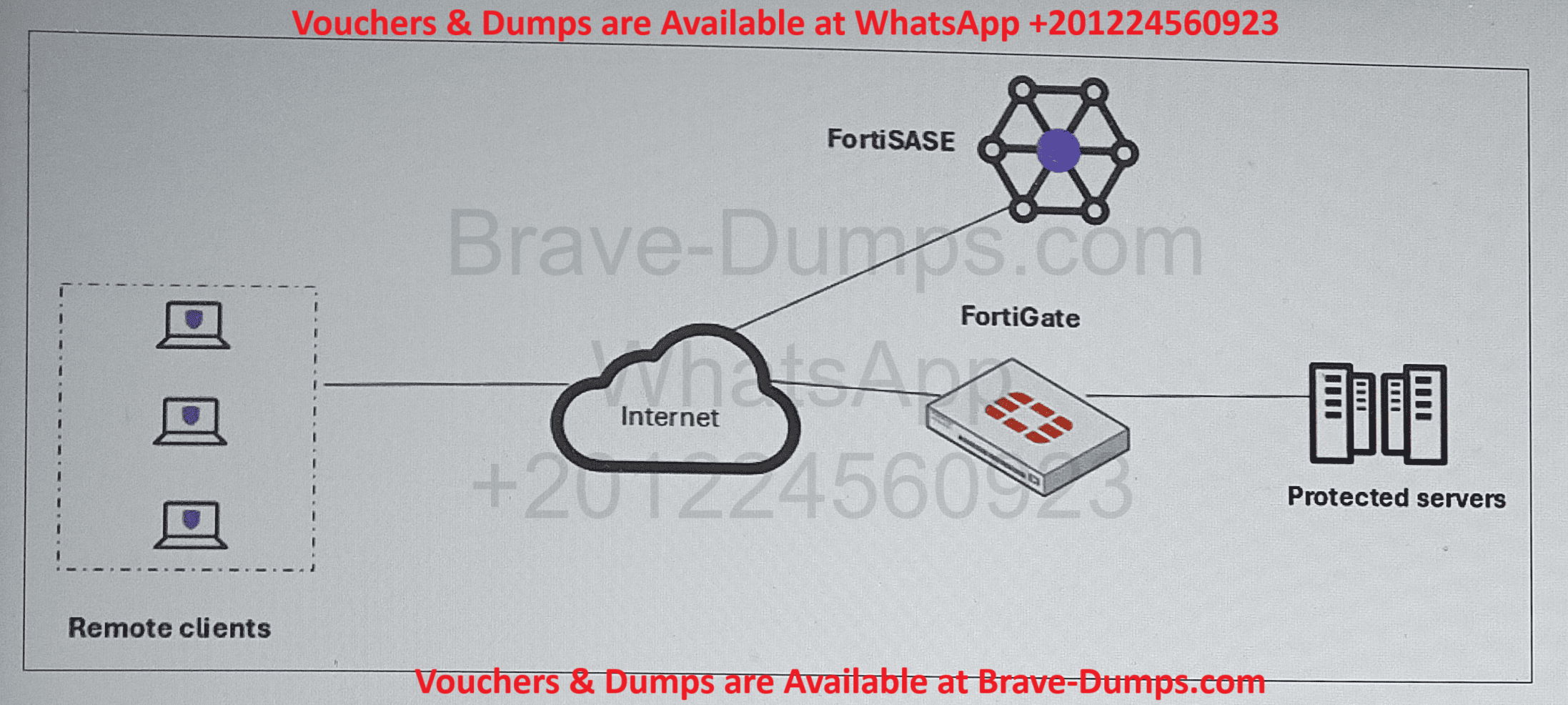
Zero trust network access (ZTNA) application gateways and applications are key components in the FortiSASE ZTNA solution for agent-based remote users. A ZTNA application gateway serves as a secure entry point that mediates the connection between remote users and internal ZTNA applications. A ZTNA application represents the actual application or service that remote users attempt to access. A ZTNA application can be any internal web or enterprise application, cloud service, or on-premise resource. A ZTNA application gateway acts as a reverse proxy, ensuring that only authorized and compliant users can access ZTNA applications based on security policies that the organization defines. You can configure a FortiGate to serve as the ZTNA application gateway.
A customer needs to implement device posture checks for their remote endpoints while accessing the protected server. They also want the TCP traffic between the remote endpoints and the protected servers to be processed by FortiGate. In this scenario, which three setups will achieve the above requirements? (Choose three answers)
Brave-Dump Clients Votes