● BIG-IP Administration Data Plane Concepts (F5CAB2)
Question #1
Question #2
A development team needs to apply a software fix and troubleshoot one of its servers. The BIG-IP Administrator needs to immediately remove all connections from the BIG-IP system to the back end server. The BIG-IP Administrator checks the Virtual Server configuration and finds that a persistence profile is assigned to it.
What should the BIG-IP Administrator do to meet this requirement?
(Choose one answer)
- A. Set the pool member to a Forced Offline state and manually delete existing connections through the command line
- B. Set the pool member to a state and manually delete existing connections through the command line
- C. Set the pool member to a Forced Offline state
- D. Set the pool member to a Disabled State
Question #3
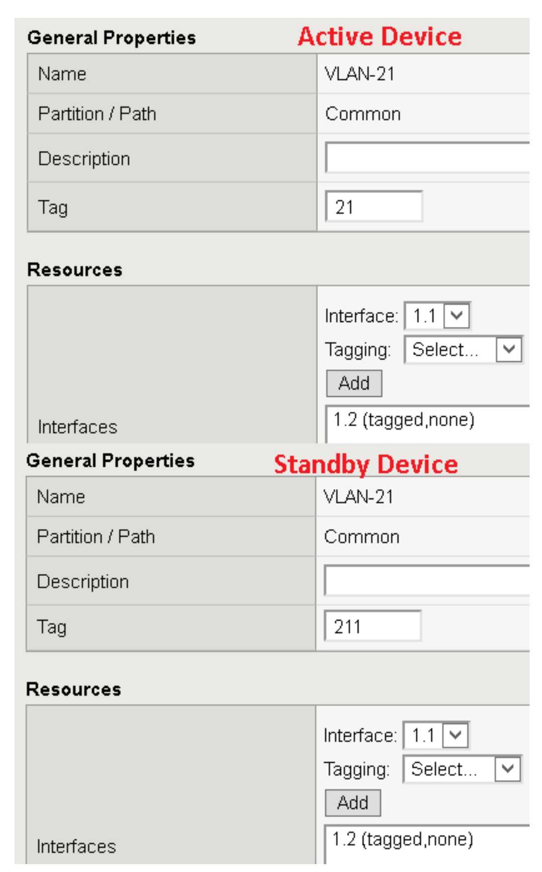
Refer to the exhibit.
During a planned upgrade to a BIG-IP HA pair running Active/Standby, an outage to application traffic is reported shortly after the Active unit is forced to Standby. Reverting the failover resolves the outage. What should the BIG-IP Administrator modify to avoid an outage during the next failover event?
(Choose one answer)
- A. The Tag value on the Standby device
- B. The interface on the Active device to 1.1
- C. The Tag value on the Active device
- D. The Interface on the Standby device to 1.1
Question #4
Active connections to pool members are unevenly distributed. The load balancing method is Least Connections (member). Priority Group Activation is disabled.
What is a potential cause of the event distribution?
(Choose one answer)
- A. Priority Group Activation is disabled
- B. SSL Profile Server is applied
- C. Persistence profile is applied
- D. incorrect load balancing method
Question #5
A BIG-IP Administrator is informed that traffic on interface 1.1 is expected to increase over the maximum bandwidth capacity on the link. There is a single VLAN on the interface.
What should the BIG-IP Administrator do to increase the total available bandwidth?
(Choose one answer)
- A. Increase the MTU on the VLAN using Interface 1.1
- B. Create a trunk object with two Interfaces
- C. Assign two Interfaces to the VLAN
- D. Set the media speed of interface 1.1 manually
Question #6
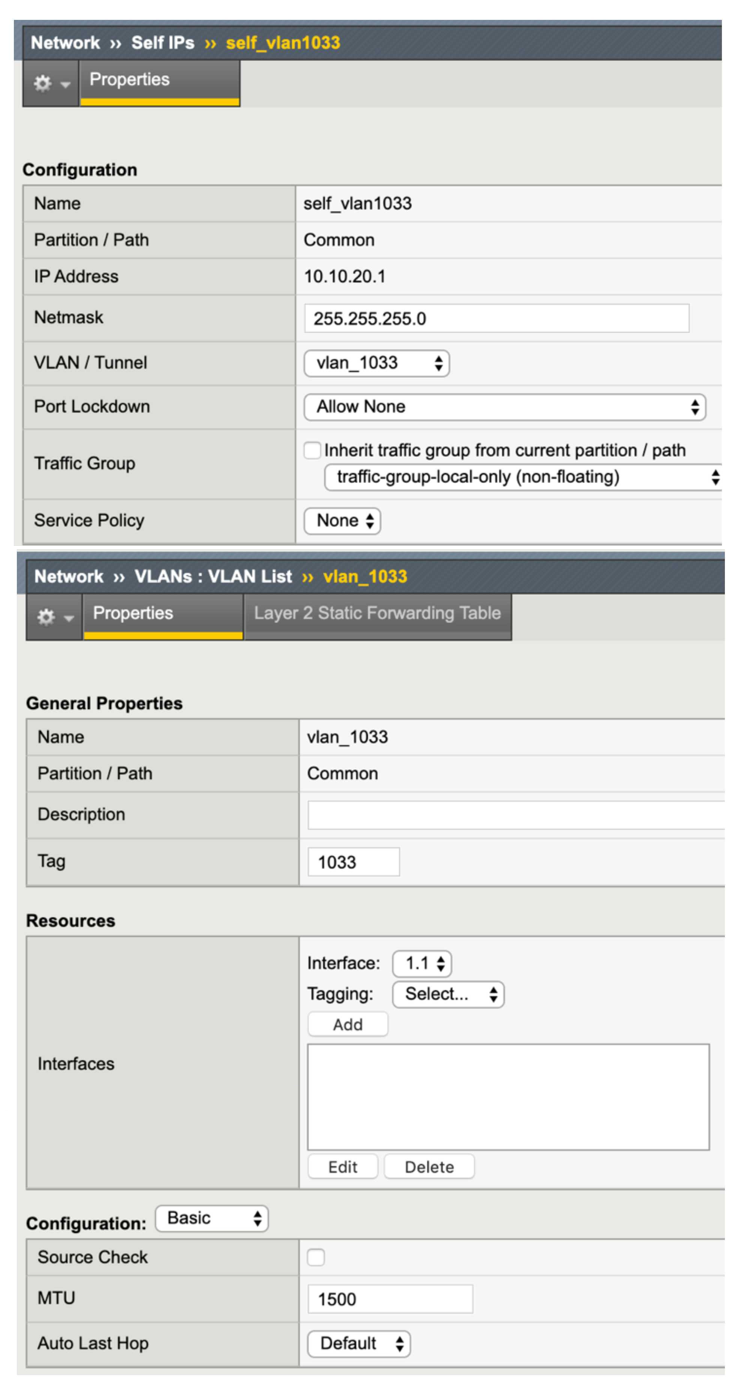
Refer to the exhibit.
The network team creates a new VLAN on the switches. The BIG-IP Administrator needs to create a configuration on the BIG-IP device. The BIG-IP Administrator creates a new VLAN and Self IP, but the servers on the new VLAN are NOT reachable from the BIG-IP device.
Which action should the BIG-IP Administrator do to resolve this issue?
(Choose one answer)
- A. Set Port Lockdown of Self IP to Allow All
- B. Change Auto Last Hop to enabled
- C. Assign a physical interface to the new VLAN
- D. Create a Floating Self IP Address
Question #7
A BIG-IP Administrator has a cluster of devices.
What should the administrator do after creating a new Virtual Server on device 1?
(Choose one answer)
- A. synchronize the settings of the group to device 1
- B. create a new cluster on device 1
- C. synchronize the settings of device 1 to the group
- D. create a new virtual server on device 2
Question #8
Which of the following lists the order of preference from most preferred to least preferred processing of a virtual server? (Choose one answer)
- A. destination host address, source host address, service port
- B. source host address, service port, destination host address
- C. service port, destination host address, source host address
- D. No Option
Question #9
An organization needs to deploy an HTTP application on a BIG-IP system. The requirements specify hardware acceleration to enhance performance, while HTTP optimization features are not required.
What type of virtual server and associated protocol profile should be used to meet these requirements?
(Choose one answer)
- A. Type: Stateless Protocol Profile: fastL4
- B. Type: Standard Protocol Profile: tcp-wan-optimized
- C. Type: Performance (Layer 4) Protocol Profile: fastL4
- D. Type: Performance (HTTP) Protocol Profile: fasthttp
Question #10
An application is configured so that the same pool member must be used for an entire session, as well as for HTTP and FTP traffic.
A user reports that a session has terminated, and the user must restart the session. The BIG-IP Administrator determines that the active BIG-IP device failed over to the standby BIG-IP device.
Which configuration settings should the BIG-IP Administrator verify to ensure proper behaviour when BIG-IP failover occurs?
(Choose one answer)
- A. cookie persistence and session timeout
- B. Stateful failover and Network Failover detection
- C. Persistence mirroring and Match Across Services
- D. syn-cookie insertion threshold and connection low-water mark
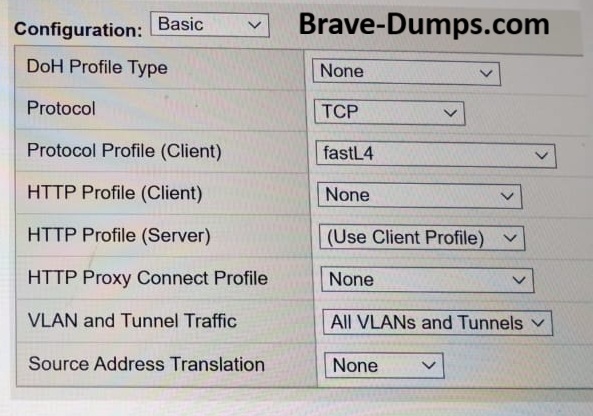
Refer to the exhibit.
Which Virtual Server type is being configured? (Choose one answer)