● NSE 7 - Secure Networking 7.6 Architect Exam Materials
Question #1
Question #2
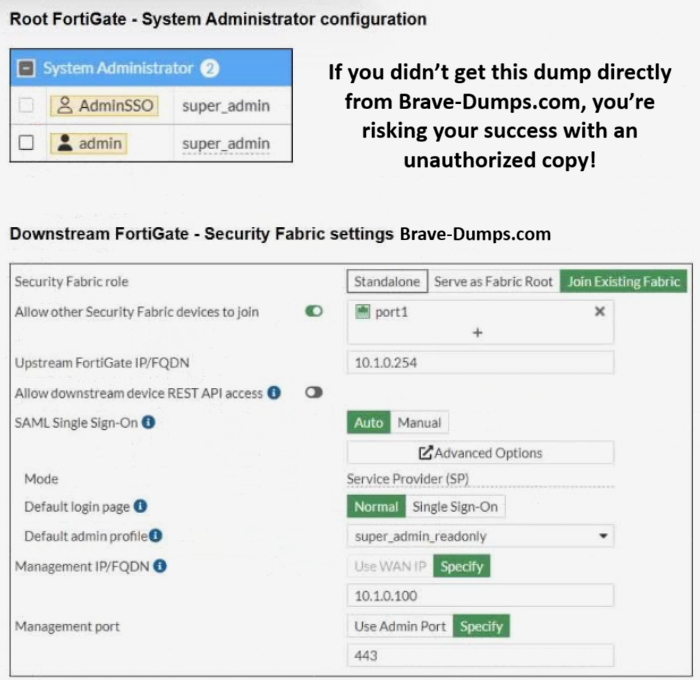
Refer to the exhibits.
The system administrator settings configured on a root FortiGate and the Security Fabric settings configured on a downstream FortiGate are shown.
When prompted to sign in with Security Fabric to the downstream FortiGate, a user enters the single sign-on (SSO) provider credentials.
What is the result?
(Choose one answer)
- A. The user is prompted to create an administrator account for AdminSSO.
- B. The downstream FortiGate creates an SSO administrator account for AdminSSO with the super_admin_readonly profile.
- C. The downstream FortiGate creates an SSO administrator account for AdminSSO with the super_admin profile.
- D. The downstream FortiGate relies on the root FortiGate and does not create an administrator account.
Question #3
You want to configure two static routes. One that references a zone and the second one that references an SD-WAN member that belongs to that zone.
Which statement about this scenario is true?
(Choose one answer)
- A. You cannot create static routes for individual SD-WAN members.
- B. You cannot create static routes that reference an SD-WAN zone.
- C. The destination subnets must be different.
- D. The source subnets must be different.
Question #4
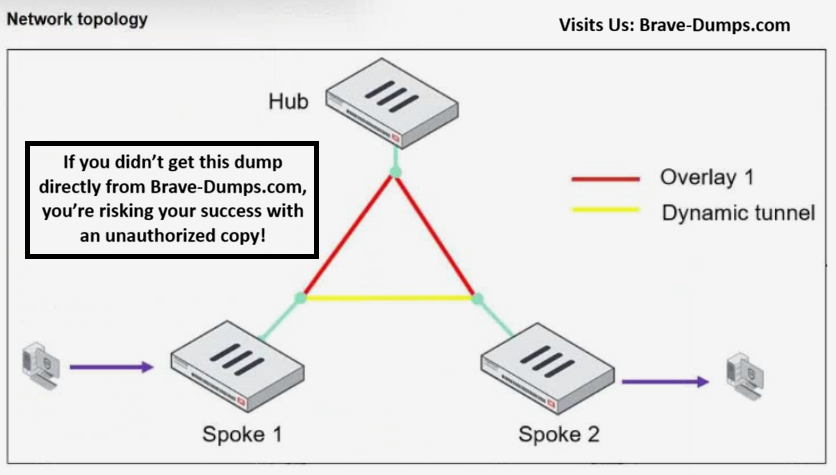
Refer to the exhibit.
Based on the exhibit, what is the first message that Spoke 1 replies to the hub instructing it to bring up the dynamic tunnel if a client generates traffic destined to Spoke 2?
(Choose one answer)
- A. Shortcut query
- B. Shortcut reply
- C. Shortcut offer
- D. Shortcut forward
Question #5
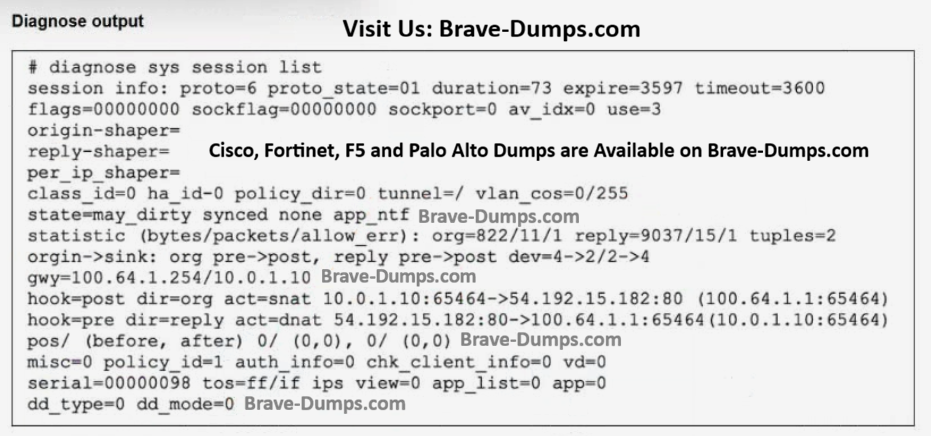
Refer to the exhibit.
The output of the diagnose sys session list command is shown.
If the HA ID for the primary device is 0, what happens if the primary fails and the secondary becomes the primary?.
(Choose one answer)
- A. The session state is preserved, but the kernel will re-evaluate the session because the routing information will be flushed.
- B. The session continues to permit traffic on the new primary device after failover, without requiring the client to restart the session with the server.
- C. The session is synchronized with the secondary device; however, because application control is applied, the session is marked dirty and has to be re-evaluated after failover.
- D. The session will be removed from the session table of the secondary device because the TCP session is not yet fully established.
Question #6
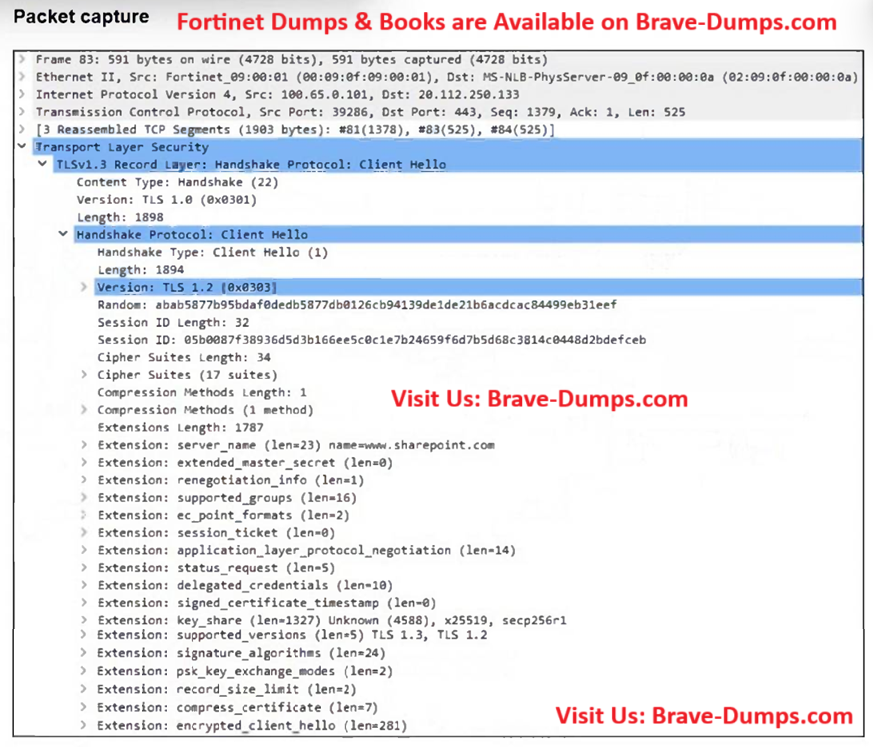
Refer to the exhibit.
The packet capture output of a client hello message is shown.
You are updating a firewall policy that includes SSL certificate inspection. You are capturing packets from the traffic passing through this firewall policy.
Which two statements about the packet capture are correct
(Choose two answers)
- A. You can effectively apply an antivirus security profile to this traffic.
- B. The subject alternative name (SAN) is necessary to apply security profiles.
- C. The client supports only TLS versions 1.2 and 1.3.
- D. You can effectively apply a web filtering profile to this traffic.
Question #7
While troubleshooting a FortiGate web filter issue, users report that they cannot access any websites, even though those sites are not explicitly blocked by any web filter profiles that are applied to firewall policies.
What are the three most likely reasons for this behavior?
(Choose three answers)
- A. The SSL/TLS deep inspection was configured but the browsers do not have the FortiGate certificate installed.
- B. The webfilter-force-off setting has been enabled under config system fortiguard.
- C. The web filter cache has been cleared causing all websites to take longer to be rated.
- D. The DNS server is unreachable, preventing URL resolution.
- E. The FortiGuard Web Filtering license has expired, causing FortiGate to apply the default block action.
Question #8
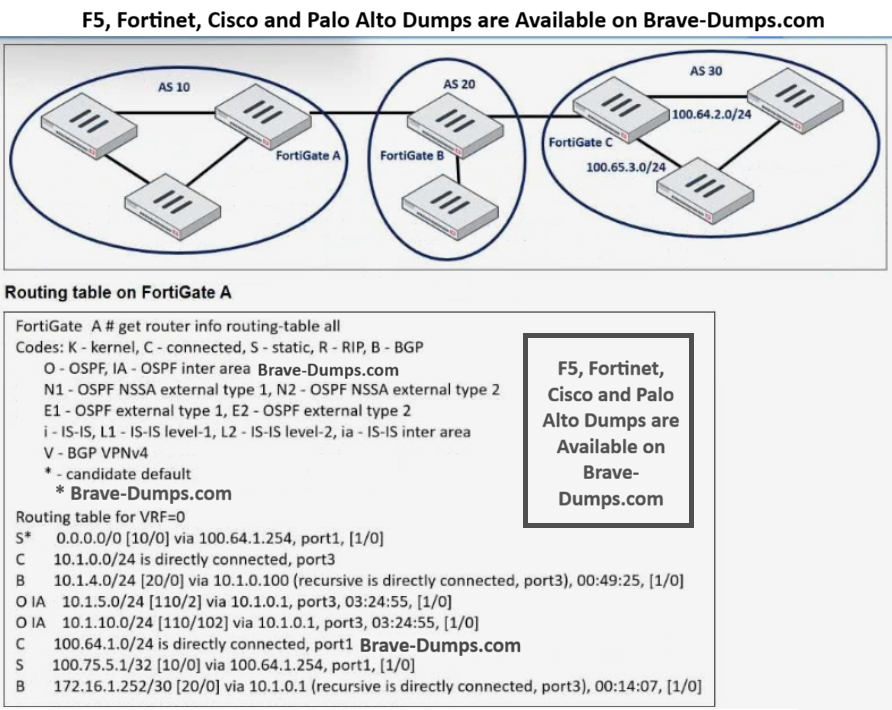
Refer to the exhibit.
A network topology and the routing table of a FortiGate device is shown.
What must the administrator configure in the BGP section to add only the subnet 100.64.2.0/24 in the routing table of FortiGate_A?
(Choose one answer)
- A. The administrator must configure route-map-in on FortiGate_A.
- B. The administrator must configure connected routes redistribution on FortiGate_C.
- C. The administrator must configure the 100.64.2.0/24 network on FortiGate_C.
- D. The administrator must configure BGP route redistribution on FortiGate_B.
Question #9
If you configure set tcp-mss-sender and set tcp-mss-receiver in a firewall policy, how does it affect the size and handling of TCP packets in the network? (Choose one answer)
- A. The commands affect the payload size of the packet and the size of the IP header for handling TCP packets.
- B. The TCP packet modifies the packet size only if no fragmentation occurs.
- C. Applying commands in a firewall policy determines the largest payload a device can handle in a single TCP segment.
- D. The maximum segment size permitted in the firewall policy determines whether TCP packets are allowed or denied.
Question #10
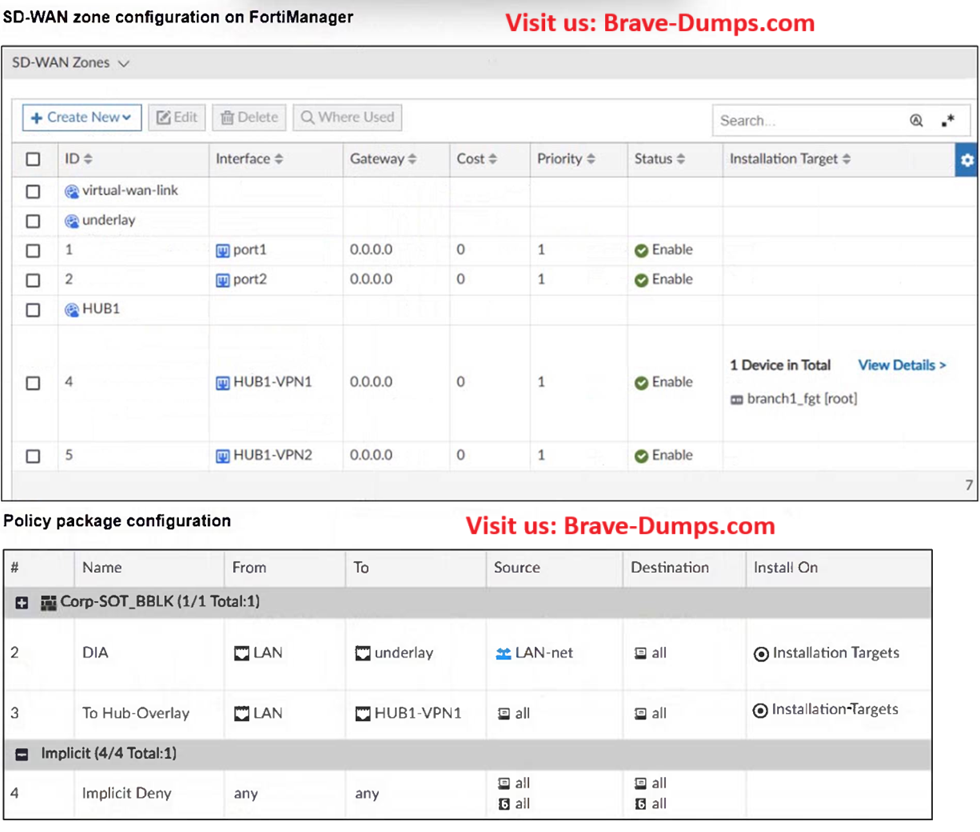
Refer to the exhibits.
The SD-WAN zone configuration of an SD-WAN template prepared on FortiManager and the policy package configuration are shown.
When you try to install the configuration changes, FortiManager displays an error message.
How can you fix the issue?
(Choose one answer)
- A. Configure HUB1 as the destination of policy 3.
- B. Configure both HUB1-VPN1 and HUB1-VPN2 as the destination of policy 3.
- C. Configure branch1_fgt as the installation target for policy 3.
- D. Configure a normalized interface for the IPsec tunnel HUB1-VPN1.
Refer to the exhibit.
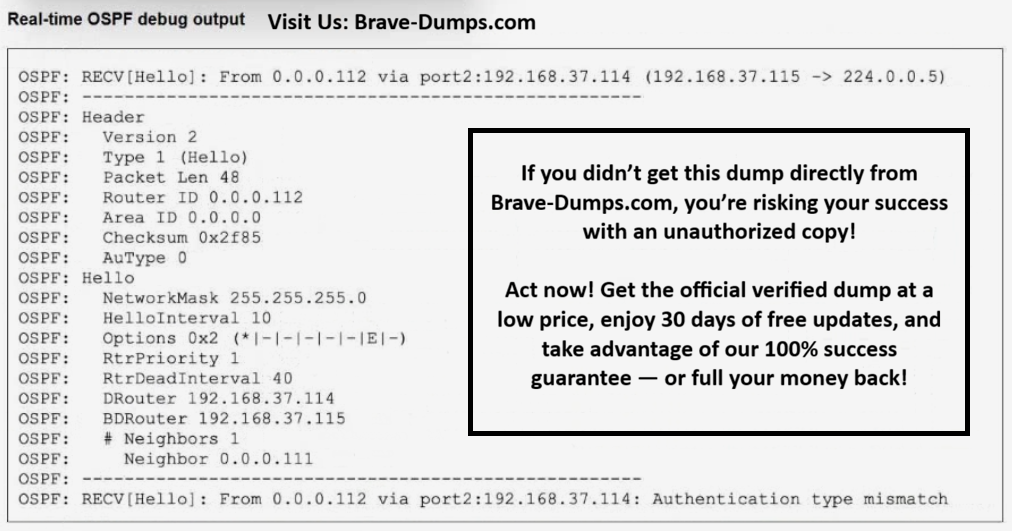
Partial output of a real-time OSPF debug is shown.
Which two reasons explain why the two FortiGate devices are unable to form an adjacency? (Choose two answers)